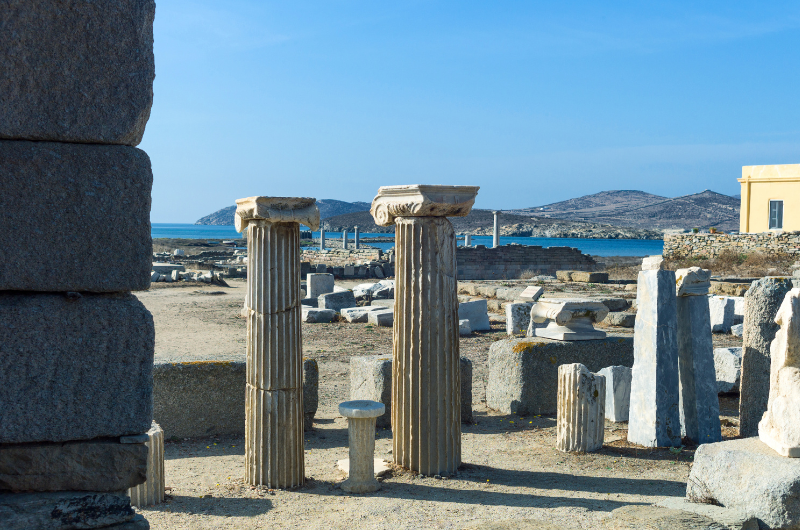
There are places where history is read, and others where it is felt beneath your feet. Delos island belongs to the latter. Rising quietly from the Aegean Sea, just a short distance from Mykonos, this uninhabited land carries centuries of human presence, belief, trade, and artistic expression.
A Delos island tour reveals a world where mythology and reality meet, where every stone has a story, and where silence speaks louder than any guidebook.
Most visitors arrive via Mykonos Port, the main departure point for ferries heading to Delos island.
A Journey to Delos Island Begins from the Sea
Reaching Delos island is part of the experience itself. The only way to access the island is by boat, with daily ferry departures from Mykonos and other nearby islands such as Paros and Naxos. Most travelers begin their Delos island tour from Mykonos Town, with boats departing from Mykonos Port, with departures in the morning and return trips in the early afternoon.
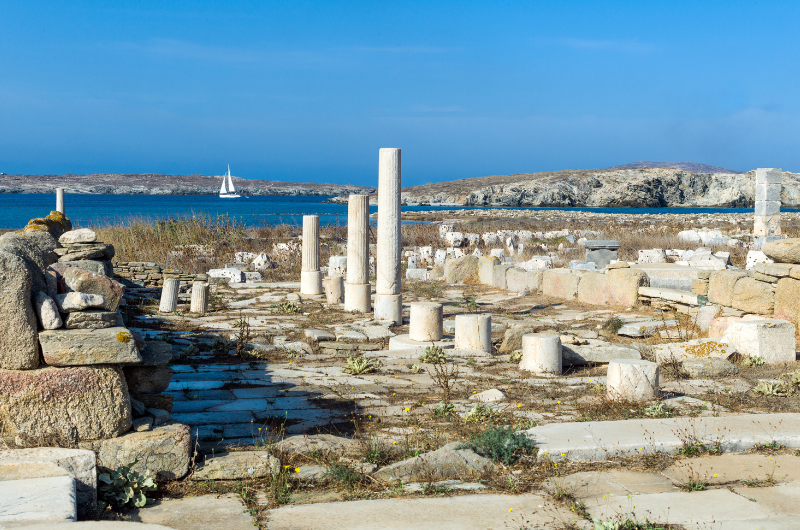
The journey lasts approximately 20 to 30 minutes, depending on sea conditions. As the boat approaches, the island reveals its raw character. Rocky terrain, scattered ruins, and marble fragments emerge against the intense blue of the sea. The absence of vegetation enhances the contrast, allowing the archaeological remains to stand out with striking clarity.
During peak season, it is highly recommended to secure ferry tickets in advance, as demand increases significantly between late spring and early autumn.
Why Delos Island Holds Global Significance
Recognized as a UNESCO World Heritage Site, Delos island stands among the most important archaeological locations in Greece. Its influence extends far beyond its small size. According to Greek mythology, it is the birthplace of Apollo and Artemis, twin deities representing light and the moon.
From around 1400 BC, the island developed into a powerful religious and commercial center. Pilgrims traveled from across the ancient Greek world to honor the gods, while traders used the island as a central hub for commerce across the Mediterranean.
During Roman times, Delos evolved into a thriving duty free port, attracting merchants and populations from various regions. At its peak, around 90 BCE, the island supported a population of approximately 30,000 people. This growth led to the construction of grand residences, public buildings, sanctuaries, and marketplaces.
A Delos island tour offers direct access to this layered history, allowing visitors to move through spaces shaped by centuries of political shifts, economic expansion, and cultural exchange.
Walking Through an Open Air Museum
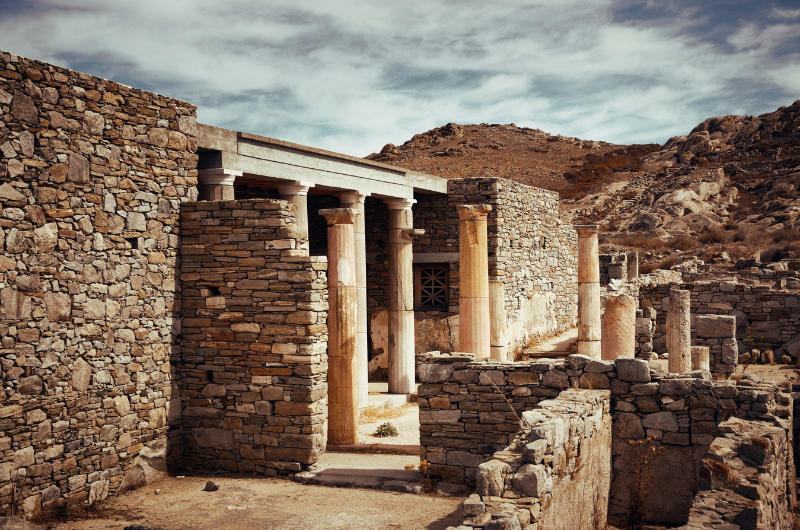
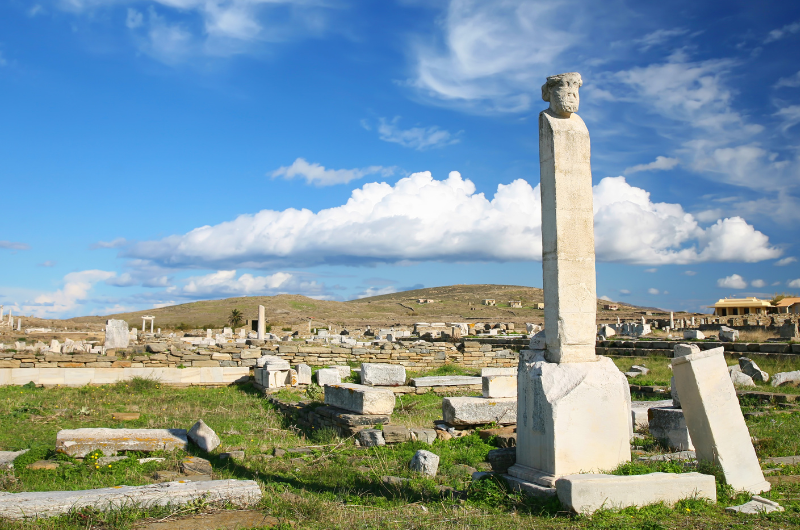
Exploring Delos island feels like stepping into a vast open air museum. The archaeological site spans the entire island, covering an area roughly 5 kilometers long and 1.3 kilometers wide. Because the island has remained largely uninhabited since the 7th century, many structures have been preserved in remarkable condition.
Visitors can explore independently, although a guided Delos island tour provides deeper understanding of the ruins and their original purpose. Without interpretation, the scale of the site can be overwhelming. Paths are uneven and unpaved, so comfortable walking shoes are essential. The terrain, combined with minimal shade, makes preparation important, especially during the summer months.
Many visitors combine their Delos island tour with time exploring the best beaches in Mykonos once they return to the island.
The Most Remarkable Highlights of Delos Island
The Terrace of the Lions
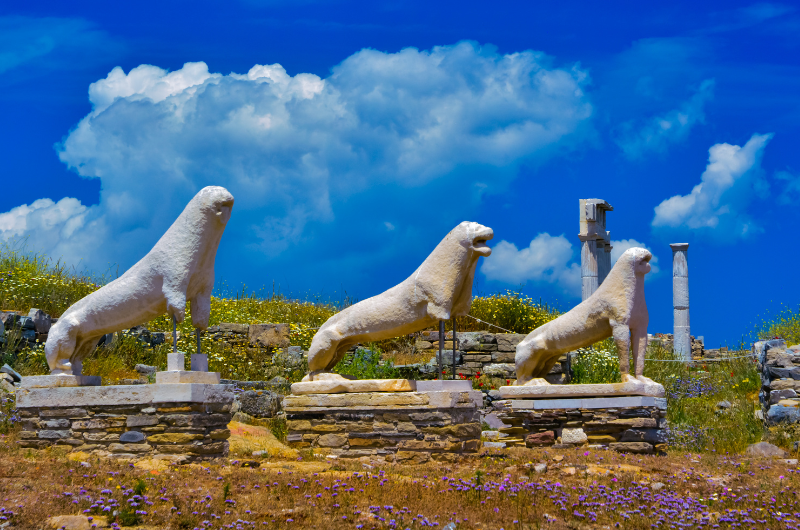
One of the most recognizable features of Delos island, the Terrace of the Lions consists of marble statues originally created by the people of Naxos during the 7th century BC. These figures were positioned to guard the sacred area near the harbor. Today, replicas stand in place, while the originals are preserved in the museum.
The Theatre Quarter
This district reveals the daily life of Delos during its most prosperous period. Surrounding a marble theatre that once accommodated over 6,500 spectators, the area includes narrow streets and impressive residences owned by wealthy merchants.
The House of Dionysus
Among the most visually striking locations on Delos island, this residence features a detailed mosaic depicting Dionysus riding a panther. The design reflects both artistic refinement and the wealth of its former inhabitants.
The Sanctuary of Apollo
At the heart of the island lies the Sanctuary of Apollo, composed of three temples dedicated to the god. The largest once housed a monumental statue, of which only fragments remain today.
The Agora of the Competaliasts
Located near the harbor, this marketplace functioned as the commercial center of the island. Remnants of shops and trading areas illustrate the importance of commerce during the island’s peak.
The Archaeological Museum
The museum houses sculptures, mosaics, pottery, and everyday objects discovered during excavations. Although many artifacts have been transferred to Athens, the remaining collection provides valuable insight into life on Delos island.
Mount Kynthos
For those willing to climb, Mount Kynthos offers panoramic views across the island and surrounding sea. The ascent takes approximately 20 minutes and rewards visitors with a perspective that brings the entire landscape into focus.
A Timeline Shaped by Power, Trade, and Belief
The history of Delos island reflects constant transformation. From a sacred sanctuary in early antiquity, it evolved into a commercial powerhouse under Roman influence. Its strategic location attracted traders from across the Mediterranean, turning it into a central node for goods and cultural exchange.
However, this prosperity also made it vulnerable. The island suffered repeated attacks from pirates and invaders. After its destruction, the remaining population gradually abandoned it, and by the 7th century, Delos was left largely deserted.
Excavations began in 1873 by French archaeologists, uncovering the vast extent of the site. Research continues today, with many areas still buried beneath the surface.
Planning Your Delos Island Tour
A typical Delos island tour lasts between two and three hours, allowing enough time to explore key areas without feeling rushed. Visitors should always keep track of ferry schedules to avoid missing their return trip. Entry to the archaeological site and museum costs €20 and is purchased on arrival. A return ferry ticket from Mykonos costs approximately €25, with reduced fares for children.
Ferries operate frequently throughout the week, although schedules may change due to weather conditions. Strong winds can affect departures, so checking updates before traveling is essential.
Departures are organized through Mykonos Port, making it essential to confirm schedules directly at the harbor.
What to Know Before Visiting Delos Island
Preparation enhances the experience of visiting Delos island. The site offers very limited facilities, with only basic amenities such as restrooms and a small shop near the museum.
Visitors should bring:
- Water and light snacks
- Sun protection including hat, sunglasses, and sunscreen
- Comfortable footwear suitable for uneven terrain
- Light clothing to manage high temperatures
The island can become very hot during summer, while wind conditions may vary throughout the day.
Staying Close to the Departure Point
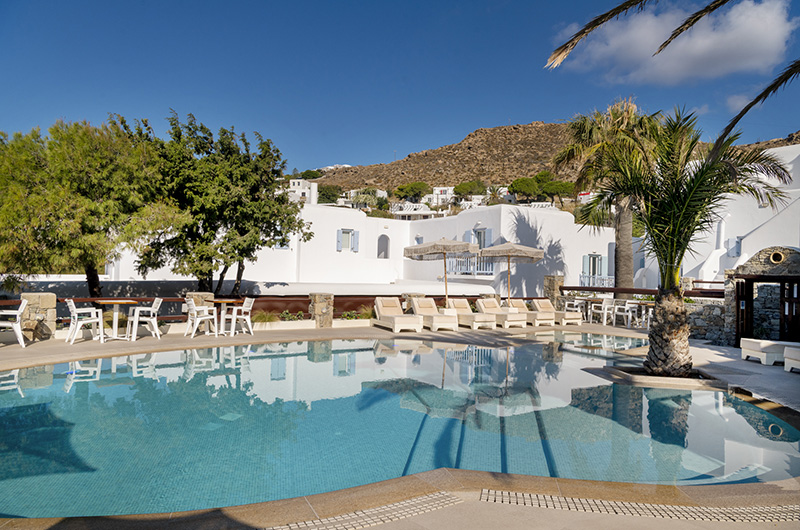
Many travelers choose to stay near the port area for easy access to their Delos island tour departure. Makis Place Hotel, located in Tourlos, offers a strategic position just 750 meters from the new port and only 80 meters from the Delos ferry departure point.
Guests searching for hotels near mykonos ferry port often prioritize convenience, especially for early departures. At the same time, those comparing hotels near mykonos town benefit from the short distance to Chora (Mykonos Town) and landmarks such as the Mykonos Windmills in Chora.
For visitors researching accommodation in Mykonos Greece, Makis Place combines location, sea views, and Cycladic architecture. The hotel provides rooms for two to four guests and offers direct access to transportation options across the island.
The on site Molaraki restaurant enhances the stay with refined cuisine and views over the harbor, creating a setting that complements the overall travel experience.
Additionally, being based near the port allows easy access to many things to do in mykonos town, from historical exploration to dining and evening walks.
Why Delos Island Stays With You
A visit to Delos island leaves a lasting impression. The absence of modern life allows the past to take center stage. Every column, mosaic, and pathway reflects human ambition, belief, and resilience across centuries.
A Delos island tour connects you directly with the foundations of ancient civilization. It offers perspective, scale, and a rare sense of continuity between past and present.
From the moment you step onto the island to the return journey across the Aegean, Delos remains present in your thoughts. It reshapes how you understand history, travel, and the passage of time.